
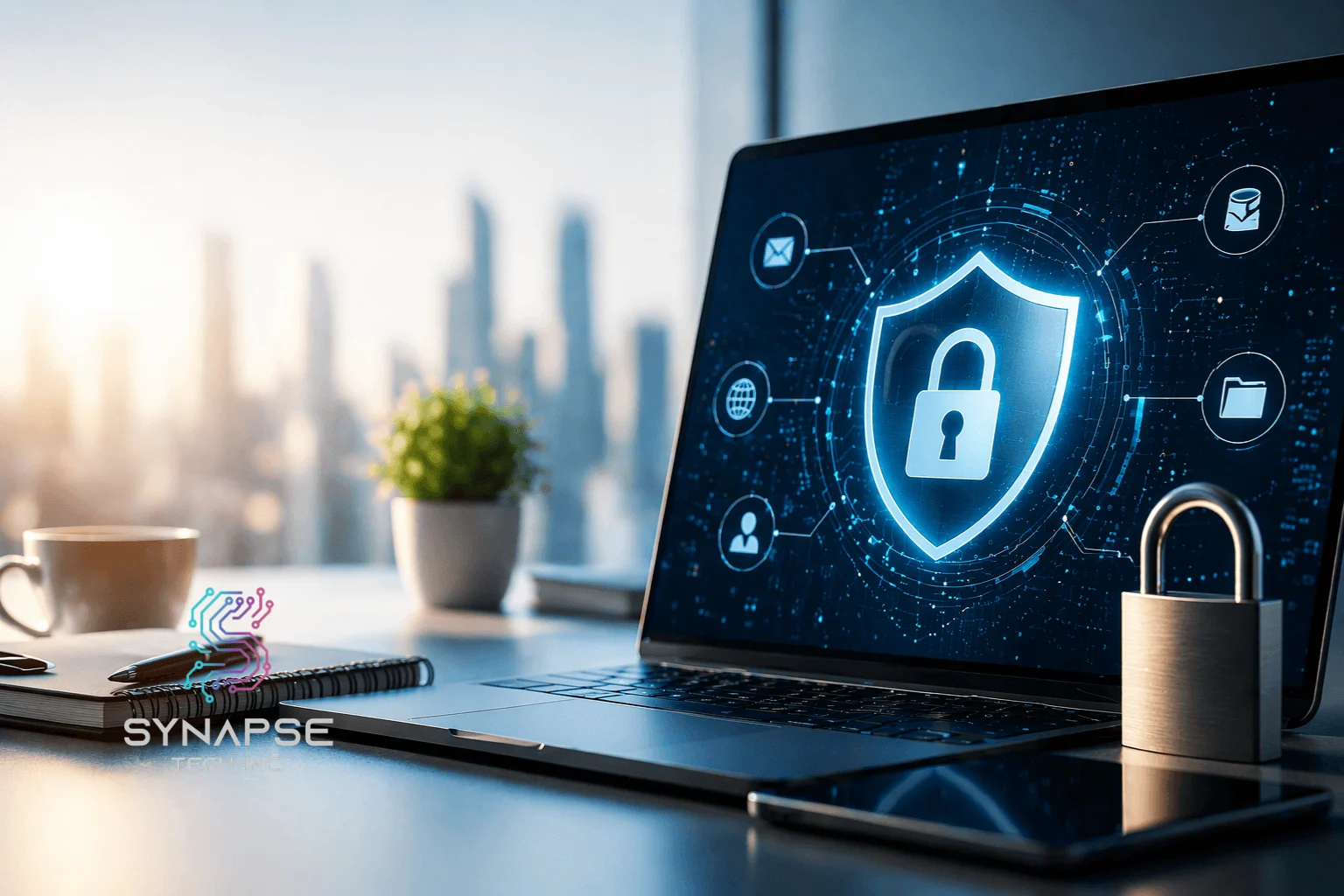
The importance of data security is something I wish more business owners took seriously before it is too late. One of my close friends lost all his e-commerce business a couple of years ago when a data breach revealed the credit card information of thousands of his customers. He has not had the right security in place, and within weeks, the fines, lawsuits, and customer walkouts have stacked up and can not be recovered. It was gut-wrenching to watch.
Each day, companies just like yours are storing, processing, and transferring sensitive data – and each day, someone somewhere is seeking a point of entry. It is not about whether or not your data is valuable enough to safeguard. It absolutely is.
This article will take you through all that you should know about data protection. We will discuss what data security is, why the consequences of not taking it seriously are more severe than most individuals think, and where you need to begin when implementing your defenses.
What Is the Importance of Data Security?
Data security is a concept that describes the practices, tools, and policies employed to guard digital information against unauthorized access, corruption, or theft. Imagine it is the key to all that your business cares about: customer records, financial data, intellectual property, and so on. It encompasses all the encryption and access controls, backup systems, and security measures. In simple terms, when your business operates on data, which all businesses do, then the importance of data security is not a matter of choice. It’s essential.
The Importance Of Data Security In Protecting Against Cyber Attacks
Here’s where things get real. The importance of data security becomes very obvious once you take a glance at what happens when it is neglected. The effects are not only technical, but financial, legal, and quite personal.
- Large GDPR fines: Regulators are unforgiving. Companies may be fined up to 4% of their yearly global turnover due to a breach of data under GDPR. In 2023, alone, Meta suffered a historic fine of 1.2 billion euros due to its inappropriate treatment of user data. You may believe that your business is not large enough to be on the radar, but you are mistaken because regulators are casting a wider net than ever.
- Criminal Convictions: Breach of data not only leads to fines. In severe incidents, both executives and employees may be brought to face criminal charges of negligence or deliberate mishandling of the data. My friend had narrowly escaped that line–and I could see the terror in his eyes when his attorney first spoke of the word liability. No one enters into a business with the hope that he or she will end up in a courtroom. But it does occur more frequently than you might think.
- Tarnished Reputation: Likewise, reputational losses resulting from a data breach can be devastating and enduring. Customers entrust you with their information. Once that trust is lost, the climb back is really difficult. Research indicates that two-thirds of customers become distrustful of a firm once it has been hacked into, and most of them never return. My friend lost 70 percent of his repeat customers in the first month alone.
- Loss of Sales/Profit: Lastly, there is the financial blow that extends beyond fines. The loss of customers, stalled operations,k emergency IT costs, and lawsuits cost money very quickly. IBM estimates that the average cost of a data breach in 2025 was $4.44 million. To smaller companies, that is a death blow of a loss – and it was to my friend.
With Synapse Tech Inc. cyber security services, you can deploy AI-driven cyber security systems that make risk easier to spot, evaluate, and handle, without disrupting what’s already working. Whether you need help securing sensitive data, meeting compliance requirements, or strengthening your infrastructure, we’re here to help.
Where Should You Start: Basic Cyber Security In Place
The good news? You don’t have to overhaul everything overnight. This is where I would begin–and where my friend, in fact, began a few years later:
Cyber Security Measure |
What It Does For You |
| Firewall | Your first line of defense will be a firewall. It tracks and blocks incoming and outgoing traffic in the network according to security policies. Your network is an open door without one. |
| IDS/IPS | Intrusion Detection and Prevention Systems check your network to see whether there is any suspicious activity. Consider IDS as the lock and IPS as the alarm – you want them operating in unison. |
| VPS/VPN | A Virtual Private Server or Virtual Private Network will encrypt your internet connection and hide your network activity. This is essential, particularly to remote teams. |
| Servers/ Gateways | Securing your servers and gateways implies that you are able to control what goes in and out of your infrastructure. One of the most prevalent access points for attackers is via unsecured servers. |
| Fixed/ Whitelisted IPS | Limiting access to preprogrammed or whitelisted IP addresses implies that only authorized sources have access to your systems. It is an easy action that greatly decreases your exposure. |
| Version & Patch Updates | A hacker is an enemy of outdated software. As an illustration, the notorious WannaCry ransomware attack in 2017 took advantage of a vulnerability that already had a patch available – many organizations had simply not applied it yet. Stay updated. Always. |
| Port Access Control | Open ports are open bids. The ability to control ports that are available and to whom, drastically reduces the attack surface. The open ports should always be the ones that you require. |
| Strong Password Policy | It just sounds simple – yet weak passwords are one of the most common reasons for data breaches. Use complicated passwords, require password resets, and multi-factor authentication throughout your organization. No exceptions. |
| Data Encryption | Encryption is a method that can be used to make sure that even when someone intercepts your data, they cannot read it without the decryption key. Always encrypt data at rest and in transit. |
Conclusion
To sum up, the importance of data security cannot be overstated in today’s threat landscape. Fines of up to crippling amounts and ruined reputations cannot be paid. Things would have been very different for my friend had he only listened to those early warning signals.
Read More: What Is Cyber Security and Why Does It Matter Today in 2026?
Concisely, it is not only a technical obligation to protect your data, but also a business one. Begin with the fundamentals, and then expand upon them, and do not wait until you are breached before you realize the importance of it. Contact us today to integrate your system with our AI-driven solutions!
FAQs
How is data security different than cybersecurity?
Data security is specifically concerned with the security of the data itself, i.e., making sure that the data is not accessed, modified, or stolen. The wider term is cybersecurity, which encompasses the safeguarding of the whole system, networks, and devices against digital attacks. One of the many components of cybersecurity is data security.
Is data security a part of cybersecurity?
Yes, absolutely. Data security falls under the umbrella of cybersecurity. Whereas cybersecurity deals with the entire gamut of online dangers, data security narrows down to the protection of the very information your company is holding and processing.
What is the importance of data security?
Data security is important to your business because it helps you prevent losing money, legal fines, reputational risk, and business interruption. It fosters customer trust, regulates appropriately, and grants your most prized asset–your data–safe in the hands of individuals who would use it.