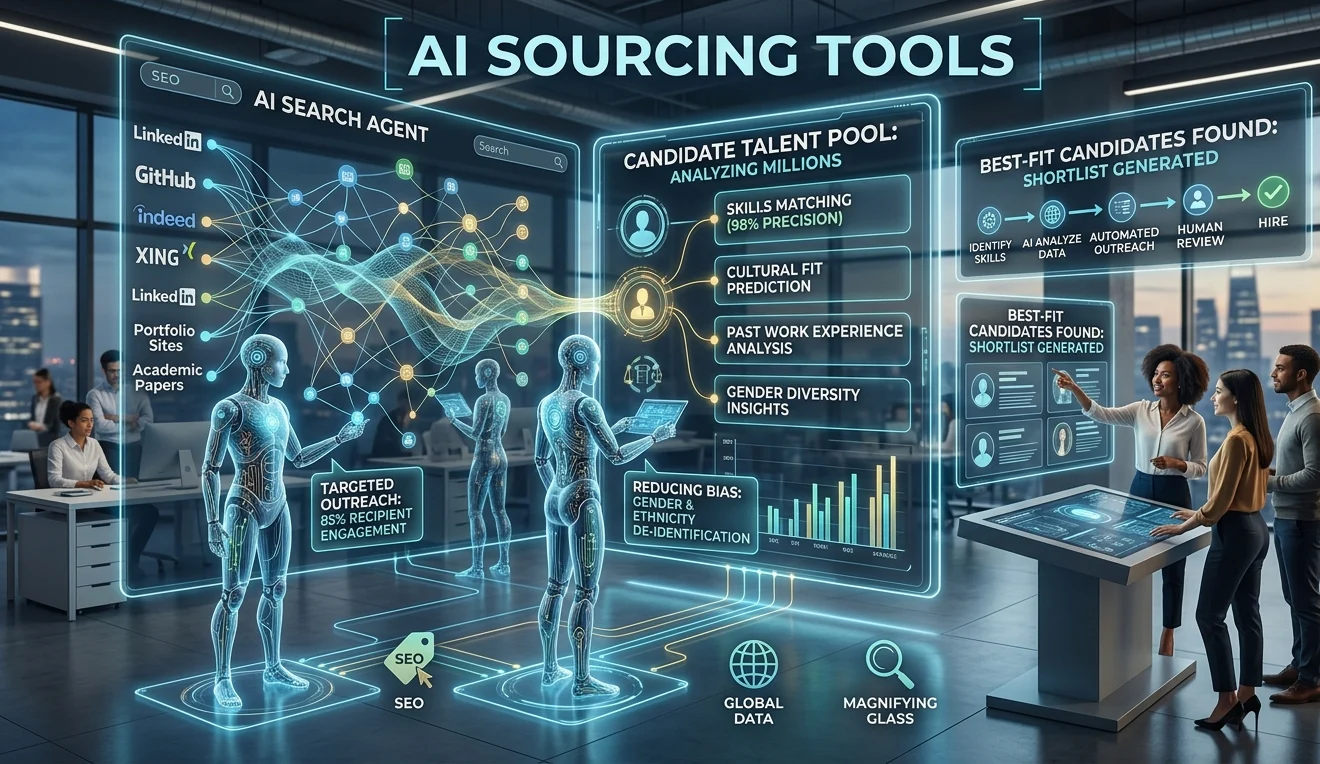
AI sourcing tools have revolutionized the way to recruit top talent. A few years ago, the process of finding candidates for a job involved posting a job, waiting, and hoping that someone wanted it. That’s a flawed model — and most hiring teams know it. The top candidates are not checking out job posting websites. They’re passive, they have jobs, and they’re not looking. Without something cleverer than an advert for a job, they’re impossible to reach first.
LinkedIn reported that 70% of the entire workforce in the world are passive candidates. But still most companies are investing the majority of their recruiting budget in the 30% that are actively looking for a job. It’s simply a mismatch that you have to correct — and AI sourcing tools is how.
Let’s dive into the six best AI sourcing tools of 2026, what makes them stand out, and how to determine which is right for your hiring operation. We’ll also explain why one tool is truly superior for enterprise teams that want to maximize their ROI.
Best AI Sourcing Tools Of 2026
If you’re a talent acquisition leader, HR director, recruiter, or someone tired of slow talent pipelines looking for a better and faster way to hire the best people, these 6 AI sourcing tools are for you:
iRecruit One
iRecruit One is an AI-powered hiring platform created by Synapse that is among the best AI sourcing tools. It’s a complete recruitment engine that allows you to find candidates and shortlist them without any manual effort.
Best For: Mid-to-large enterprises with high volume hiring that require speed, objectivity and complete compliance visibility in a single platform.
The big difference with iRecruit One is the semantic matching intelligence. Instead of relying on a limited set of keywords, it matches candidates by leveraging high dimensional OpenAI and HuggingFace embeddings that understand the context – matching candidates for the right skills and experience, not just the right buzzwords on a resume. It also imports directly from inboxes via Named Entity Recognition, conducts AI voice and video interviews with sentiment analysis and integrates with Google and Outlook for automated scheduling.
I’ve witnessed recruiting teams doing weeks of screening and scheduling. iRecruit One takes that in hours — and more accurately than any manual method.
Downside: The platform’s enterprise-grade depth might be more than smaller teams require as they start their journey into AI hiring.
Tezi
Tezi is a candidate screening and sourcing solution that uses artificial intelligence to accelerate the top-of-the-funnel process for recruiters. It automates initial outreach and qualification, which means your team don’t waste time on those that are not worth a conversation.
Best For: Companies in growth phase requiring fast, accurate screening of a large volume of inbound applications.
Tezi’s strength is speed against other AI sourcing tools. It automatically engages the candidates and gathers structured qualification information without any involvement of the recruiter. But it is mostly a top-of-funnel tool; you will need a different ATS to deal with the candidates once they are qualified.
Downside: It’s not a full-fledged solution on its own—it’s primarily used as an initial screening tool.
Noon AI
With a more recent entry in the AI sourcing tools landscape, Noon AI aims to empower recruiters to create and nurture talent pipelines by offering intelligent automation and customised outreach sequences.
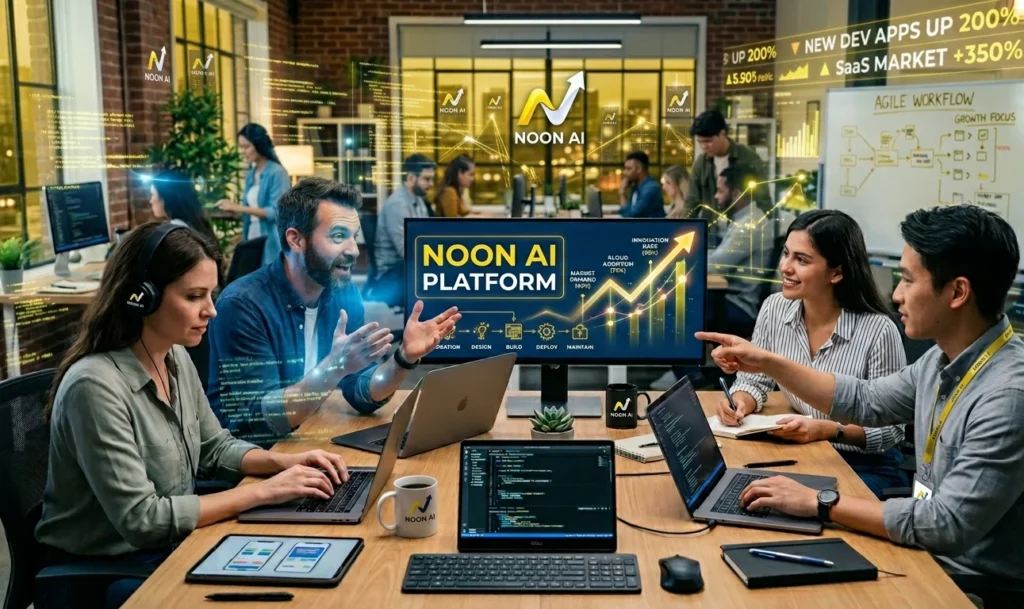
Best For: Any recruitment agency or in-house team that uses outbound sourcing as a critical element of its recruitment strategy and needs to scale outbound efforts while maintaining a personal touch.
Like other AI outreach products, Noon AI adapts texts to candidate profiles; however, the logic behind sending texts is more flexible than many of its rivals. For instance, it can modify follow-up timing and messaging according to the candidate’s response to previous follow-up.
Downside: It’s a new platform that doesn’t have as many integrations or track record as other platforms over time.
Findem
Findem’s unique approach to AI sourcing is to create what it terms as “attribute-based search,” which allows recruiters to search for candidates based on their career attributes and trajectory, not just their present job title or skills listed on their resume.
Best For: Companies having difficulties recruiting niche talent via traditional keyword searches and looking for a more complex search option.
The first thing that is different is that this is an innovative concept. Rather than looking for candidates with “5 years of Python experience,” look for those who have been consistently promoted to positions with greater responsibilities as engineers. Findem’s platform also has strong diversity sourcing capabilities.
Downside: It can be challenging for recruiters who are accustomed to traditional Boolean searching to get a handle on attribute-based searching.
SeekOut
Companies in the modern workforce can now find great talent from within and beyond their walls by pairing their deep ability to source candidates with built-in talent mobility capabilities with the help of SeekOut, an enterprise-grade AI talent intelligence platform.
Best For: Large companies seeking a seamless solution to their external recruitment and internal talent redeployment needs.
Secondly, SeekOut’s unique appeal over most AI-sourcing tools is its built-in mobility layer. SeekOut’s pre-market-ready approach brings out the existing employees who might be well suited for the job opportunities that have been available — which helps hire people at less cost and retain them more successfully. It has one of the most comprehensive diversity sourcing filters, too.
Downside: SeekOut’s pricing and complexity are ideal for enterprise teams with dedicated talent intelligence resources, but less appropriate for smaller hiring operations.
Deel Hire
Deel Hire is an AI-powered global hiring platform that sits on top of Deel’s already global payroll and compliance software. It is created for businesses that must recruit, hire, and onboard a workforce in various countries without the legal and compliance issues.
Best For: Global companies looking to streamline their international hiring process, requiring onboarding, compliance, and sourcing under one roof in several countries.
Last but not least, when you hire globally, Deel Hire eliminates one of the biggest pain points in global hiring: compliance. For instance, if a company employs full time employees in Germany and has a contractor in Brazil, hiring the contractor typically involves creating separate legal entities or costly EOR arrangements. When you need to hire the right people, Deel Hire can take care of all that, without having to deal with employment law.
Downside: If your company is hiring only within one country, then Deel Hire’s global compliance infrastructure is unnecessary and more than you need.
Conclusion
In conclusion, utilising the appropriate AI sourcing tools isn’t just about adding more candidates to the pipeline; it’s about making each hiring decision better, consistent, and defensible. All of the tools in this list help you with a problem, and the best option will vary depending on where your hiring friction is at this moment.
However, if you are seeking a single platform to source, screen, interview and schedule, without manual bottlenecks or enterprise-grade compliance, it’s obvious that iRecruit One is the one to choose. It was created by Synapse for high-volume enterprise hiring — not just to help your recruiters. It increases their production. With all this in one system, your team can spend time on decisions, not admin, with semantic matching and AI interviews, and full audit trails.
To sum up, if you’re in a hurry to reduce time-to-hire, lower recruiter workload, and implement a scalable hiring process, reach out for a demo of iRecruit One today to see how much your recruiting operation can look like without having to do all the work yourself.
| Tool | Best For | Standout Feature | Key Downside |
| iRecruit One | High-volume enterprise hiring | Semantic AI matching + voice/video interviews + full audit trails | May be more than small teams need |
| Tezi | Filtering high-volume inbound applications | Automated candidate qualification before recruiter involvement | Top-of-funnel only — needs a separate ATS |
| Noon AI | Outbound sourcing and scaled outreach | Flexible sequencing that adjusts based on candidate engagement | Newer platform with limited integrations |
| Findem | Finding niche and high-potential talent | Attribute-based search using career trajectory, not just keywords | Steep learning curve for traditional recruiters |
| SeekOut | Large enterprises with internal mobility needs | Sources external talent and surfaces internal candidates simultaneously | Too complex and costly for smaller hiring teams |
| Deel Hire | International and cross-border hiring | Sourcing, compliance, and onboarding across multiple jurisdictions in one place | Unnecessary complexity for single-country hiring |
FAQs
Why is iRecuit One better than the other AI sourcing tools?
The majority of tools focus on one aspect, whether sourcing, screening, or scheduling, when it comes to hiring. With iRecruit One, it’s done in one platform. It’s far more than a sourcing add-on; it’s a hiring engine, with semantic matching, AI video and voice interviews, inbox parsing and full audit trails.
Can AI sourcing tools improve diversity hiring?
Yes. AI tools for finding resumes with skills-based matching eliminate unconscious bias that can take its toll during human resume screening. Candidates are assessed on the capacity to perform, rather than on school attended and names.
How do AI sourcing tools handle data security?
The best platforms feature enterprise-grade encryption, role-based access controls, and compliance with GDPR. iRecruit One has complete audit trails for each hire and enterprise security features, making it one of the more compliance-heavy solutions for enterprises that need to hire in volume.
For more information, visit Synapse Tech Inc.