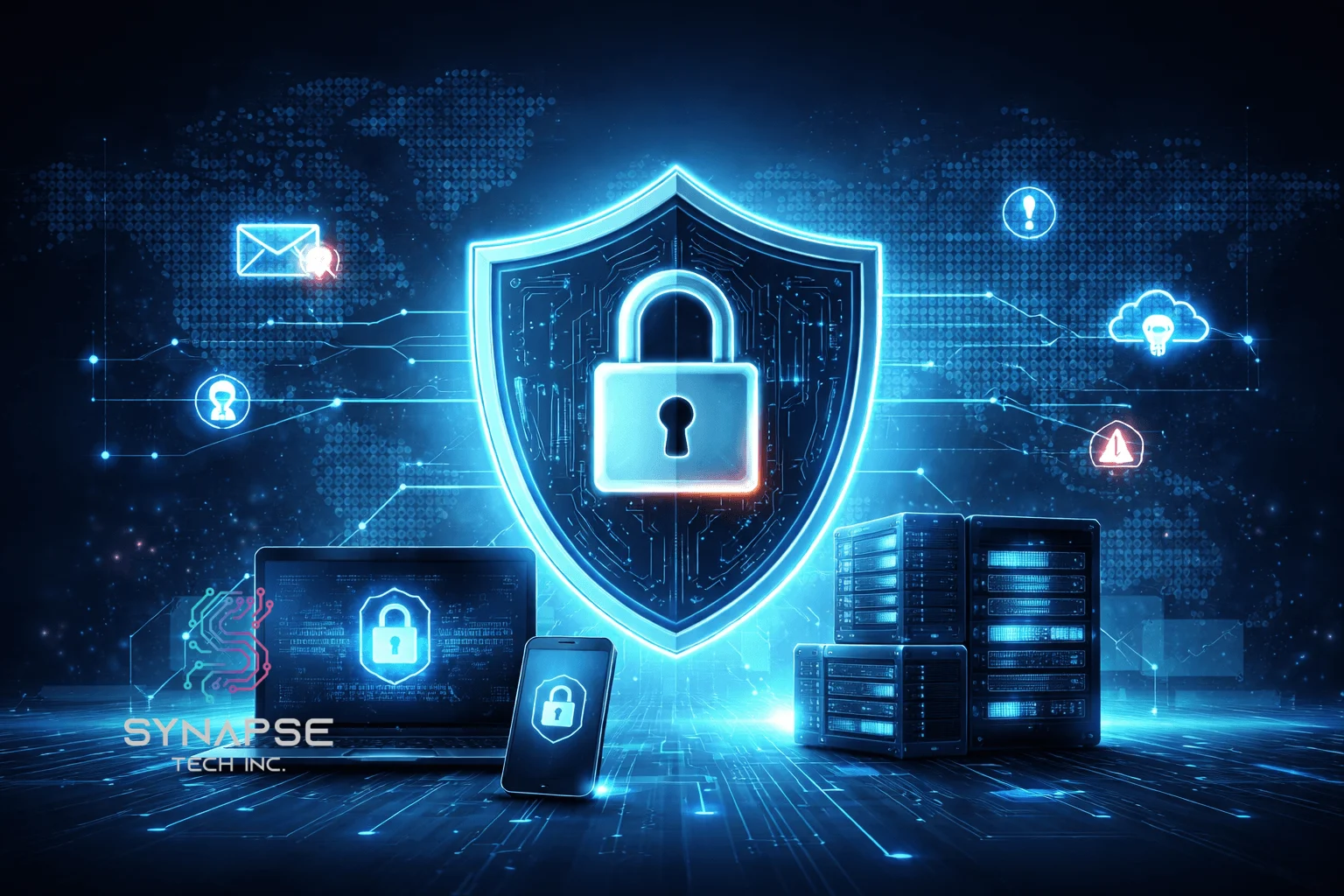
Cyber security is no longer a buzzword used by technology experts in a circle, but it is a matter that affects us all daily. Whenever you check your bank account, e-mail at work, or browse online, you are working in a place where someone is trying to compromise it. A cyber security framework provides organizations – and individuals – with a practical method to consider and to deal with those risks.
It’s not about paranoia. It’s about being prepared. Be it a Fortune 500 company or a local small business, a good framework in place might be the difference between a close call and an all-out crisis.
What Is a Cyber Attack in Cyber Security?
A cyber attack can be defined as an attempt by an individual to intentionally access, destroy, or disrupt a digital system that does not belong to them. Simple enough, right? However, the truth is much more dubious. Hackers do not necessarily desire money. There are times when they desire data. At times, they desire to create havoc. Sometimes it’s political.
The motives are everywhere, and this is what makes counteracting such threats so difficult. What’s even more alarming is the fact that by 2027, the annual average cost of a cybercrime will cross $23 trillion, a number that tells us how serious and widespread the problem has become. The only thing that remains the same, however, is the intent – and intent is never good.
6 Types of Cyber Security Attacks You Should Know
Cyber attacks do not have a uniform appearance. Actually, they may be as different as thieves. I will give you a simple, plain-language breakdown of the most prevalent ones that you ought to be familiar with:
- Phishing: The most likely type that people have experienced is phishing, although they might not have recognized it then. You receive an email that appears to be sent by your bank, boss, or a popular company. You click the link. And, in a jiffy, you are out of your credentials. It’s more common than most people realize. In fact, the most frequent victims are usually older individuals who are probably not as familiar with the warning signs of a suspicious message. Chances are, you most likely know someone in your own family or circle who has fallen for this trap.
- Ransomware: Ransomware is as simple as it sounds; it encrypts your files, and the attacker charges you a fee to unencrypt them. Hospitals, as an example, have fallen victim to ransomware attacks that have compelled personnel to go back to the use of pen and paper, with whole systems being held at ransom. It is not only inconvenient but can also cost lives.
- DDoS: DDoS attacks are not about stealing but breaking. Attackers bombard a server with excessive traffic to the point it goes down under the strain of the traffic, causing real users to be locked out.
- SQL Injection: SQL Injection is a more insidious one. The hackers inject malicious code into the database input fields of a website, and this allows them to have access to all data that is behind the scenes: usernames, passwords, credit card numbers, you name it.
- MITM: MITM (Man-in-the-Middle) attacks occur when somebody silently places themselves in between you and whoever you are communicating with. You think you’re talking to your bank. You’re not.
- Zero-Day Exploits: Zero-Day Exploits are those that make security teams work all night. These are vulnerabilities in a computer program that even the creators are not aware of, but there is no fix, and attackers are aware of the vulnerability.
Who Is Most at Risk in Cyber Security Threats?
The bad news is that no one is on a free pass. Some targets are, however, more appealing than others. Large companies and financial organizations are at the top of that list merely because of the amount of valuable data they possess. Likewise, hospitals and governmental bodies are excellent targets, not only in terms of data, but due to the actual, real-life damage that they cause when disrupted.
However, smaller businesses are typically at a disadvantage. They are more likely to be weakly defended, have minimal resources, and assume that they are too small to be bothered with. Attackers know this. And on a personal level, in case you have a smartphone, a bank account, or a social media profile, you are on the radar as well.
The Hidden Phase of Cyber Security Attacks: Reconnaissance
Most people never experience the quiet phase that precedes the occurrence of most attacks. The attackers do not simply rush blindly to attack, but rather do their homework. It is referred to as scanning and reconnaissance and is basically the planning phase of a cyber attack.
First of all, there’s passive reconnaissance. This is where attackers are collecting data without actually touching your systems – visiting your company site, reading LinkedIn profiles, viewing job ads to determine what software you run. The amount that can be learned in this manner is disturbing.
Secondly, they enter into active reconnaissance and actually scan your network to see which doors are open, what software is being used, and at what points they are likely to be weak. They know a lot about you before they even make the actual attack.
Why Cyber Security Is Important for Businesses and Individuals?
The consequences of a cyber attack far exceed the recovery of a couple of computers. On the money front, a severe breach can cost in the millions of dollars – and that is before you add the cost of litigation, governmental fines, and the price of restoring customer confidence, which might never recover. In the case of individuals, the harm is equally damaging: stolen identities, emptied accounts, and a sense of violation that remains.
And the numbers only tell a bigger story– IDC has predicted that by 2028, the global cyber security spending will cross $377 billion, a clear reflection of just how costly and widespread the problem has truly become.
Still, it is important on a larger scale as well. Cyber security safeguards the systems that ensure the continuity of modern life, such as power grids, water treatment facilities, hospital networks, and financial markets. Any of these successful attacks is not only a corporate headache, but a public safety concern.
In addition, governments worldwide are tightening the regulations. The laws such as GDPR, HIPAA, and CCPA have made organizations legally responsible in regard to the protection of personal data. It is not only dangerous to disregard cyber security, but it can also be illegal.
Conclusion
In conclusion, cyber security is one of those issues that can be postponed until something bad happens, and by the time that happens, it is usually too late. The dangers do exist, they are increasing, and they are indiscriminate. The threats are everywhere, be it simple phishing attacks or advanced zero-day attacks.
Simply put, developing a robust cyber security system is not only prudent, but also necessary. The organizations and individuals who take it seriously nowadays are the ones who will be standing tomorrow. And in an era where data is king, that is no trivial thing. When you contact Synapse Tech Inc., you’re not handed off to junior reps. You connect with people who think in AI-powered solutions, outcomes, and long-term value.