
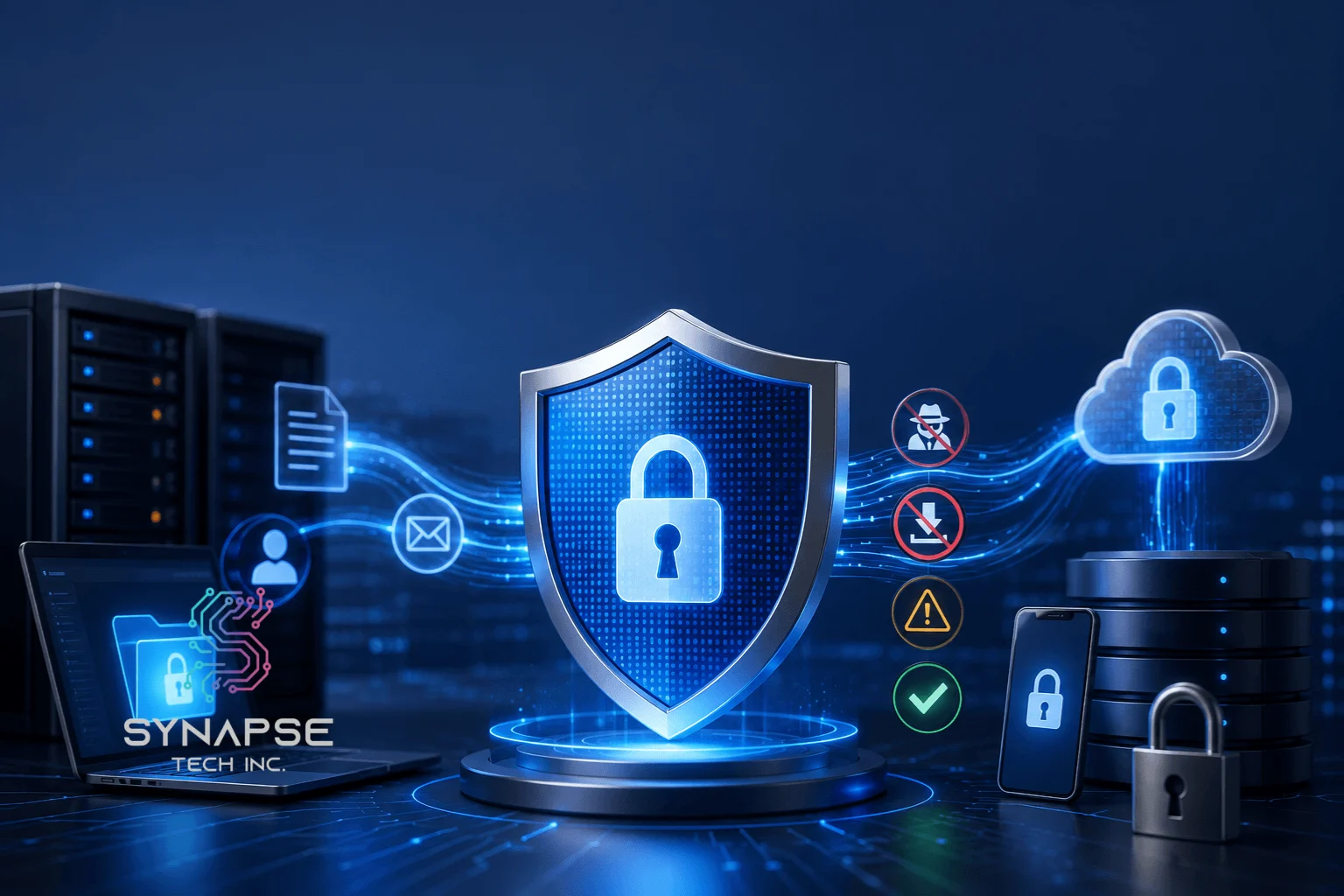
Data loss prevention is a combination of technologies, policies, and processes that identify and prevent the misuse, access, or movement of data. Put simply, it prevents your most sensitive business data from falling into the wrong hands. And in our technology-driven era, it’s not just an IT problem – it’s a business problem.
Here’s a statistic for you: in 2024, the average cost of a data breach was $4.88 million, according to IBM’s Cost of a Data Breach Report. That’s not something most companies can afford to lose. Whether you’re a small or large business, knowing how data is lost – and how to avoid it – could mean the difference between keeping your business afloat or closing up shop.
In this article, we will talk about the ways you can lose data, why it happens, how data loss prevention works, and the solutions available.
3 Ways You Can Lose Data Without Data Loss Prevention
To secure your data, it’s important to know how it can be lost. This can happen in three different ways:
- Data Breach: This occurs when someone hacks into your systems and steals your data. It’s usually the most serious and headline-grabbing type of data loss.
- Data Leakage: This is the inadvertent release of sensitive information – usually due to human error. For instance, sending an important document to the wrong recipient is an example of a data leak.
- Data Exfiltration: This is the unwanted export of data from your organisation. It’s typically performed by hackers and other insiders who know what they’re looking for.
Who Needs Data Loss Prevention?
Any business that handles sensitive information can benefit from Data Loss Protection (DLP). This includes industries like finance, healthcare, legal services, government, retail, and tech companies, where data is constantly being created, shared, and stored.
It’s especially important for the people responsible for keeping that information safe—such as IT teams, security professionals, compliance officers, and business owners. Whether it’s customer details, financial records, or internal documents, having the right protection in place helps prevent costly mistakes, reduces the risk of breaches, and keeps trust intact.
5 Real Causes Of Unexpected Data Loss
If You Are Facing Insider Threats
It’s not just outsiders who pose a threat. Data loss due to insider threats, deliberate or not, is all too common. Disgruntled team members, negligent staff, or even well-meaning but ill-informed employees can put your entire business at risk.
I recently interviewed a business owner who lost years of client information because a former employee had copied files to a home PC. No rules were in place to stop it. It was a costly experience.
If You Have Malware
Malware (such as ransomware, spyware, and trojans) is designed to get into your systems and steal your data. It can lock, steal, or damage your data before you’re even aware of its presence.
In fact, according to Verizon’s Data Breach Investigations Report, more than 40% of all worldwide data breaches include the use of malware. It’s essential to keep your systems patched and to have effective endpoint security.
If You Are Facing Physical Threats
Cybersecurity is not the only type of security you need. If someone gains access to your office, server rooms, or filing cabinets, you could lose data. Yet, many organisations neglect this aspect of security and focus solely on cybersecurity.
Your Smartphone Or PC Got Stolen
When your laptop or smartphone is stolen, you’re giving an attacker direct access to emails, passwords, client data, and credit card information. Likewise, unencrypted devices are especially vulnerable as the information on them is readily accessible.
If You Have Weak Credentials Or They Were Stolen
Forged credentials and weak passwords are a popular way for cybercriminals to gain access. If you’re still using “password123” or the same password for every account, you’re an open target. Two-factor authentication and improved password policies are a must.
How Data Loss Prevention Works?
Data Loss Prevention is a technology that discovers, categorises, and tracks sensitive data within your organisation’s network. It establishes policies that monitor data usage, movement, and sharing in real time to identify when and where your security policies are being breached. If someone is using, moving, or sharing data in a way that is against your policy, the system can prevent the action from happening, or send an alert to your security team (or both) in real time.
Types Of DLP Solutions You Can Adopt
Network DLP
Network DLP tracks all data in transit across your network, including data in emails, file transfers, and web uploads. It checks the data for sensitive content and prevents unauthorized data from leaving your network.
Endpoint DLP
Endpoint DLP relates to the endpoint devices your employees use, such as laptops, desktops, and mobile phones. It regulates what data can be copied, printed, or shared from each device and provides a level of control per user.
Cloud DLP
With the shift towards cloud computing, Cloud DLP is crucial. This safeguards data in cloud services such as Google Drive, Microsoft 365, and AWS, preventing sensitive data from being shared or leaked via cloud applications.
How Synapse Helped A Company Prevent Breaches And Lowered Downtime with an AI-powered Solution?
A large financial institution was struggling to keep up with rising cyber threats. Their security team was constantly dealing with alerts, and over time, it just became too much to handle. In fact, cyberattack attempts had gone up by 73% compared to the previous year, and their older systems couldn’t respond fast enough anymore.
To fix this, they contacted Synapse, and we brought in Opira AI and integrated it into their existing IT setup. It worked quietly in the background, monitoring systems 24/7, sorting real threats from noise, and responding instantly when something looked wrong.
The results were clear. Threats were detected 98% faster, system uptime stayed at 99.99%, and successful breaches dropped by 73%.
Conclusion
In conclusion, data loss prevention is a must-have for organisations that want to stay secure. Firstly, there are many ways in which data can be lost. Secondly, the costs (for example, financial, legal, and reputational) are staggering.
So, buying the right DLP tool for your organisation is a wise decision. Your data is one of your most valuable assets. So, contact us today to beef up your security before you lose everything!
FAQs
How do you implement a data loss prevention plan?
First, determine what sensitive data you have and where it’s located. Next, categorise it according to level of sensitivity, establish policies on its usage and sharing, and select the appropriate DLP solutions to enforce these policies. And don’t forget to train your staff – technology may protect data, but you need to educate employees to help prevent loss.
Why is DLP important?
Data Loss Prevention helps to save your business money, avoid fines, and avoid reputational damage. As the number and cost of data breaches continue to rise, a robust DLP plan is critical for any business that deals with sensitive data.
What is a DLP policy?
A DLP policy is a set of guidelines that outlines how your organization should manage sensitive data. It specifies what constitutes sensitive data, who has permission to access it, how it can be transmitted, and what to do in the event of a policy breach. It’s your organisation’s guide for data security.